
I recently had the privilege of participating in the esteemed Network Instructor Symposium, an event dedicated to the confluence of education, research, and the evolving landscape of social media analysis.
The symposium kicked off with introductions all around, fostering a community atmosphere as participants from various institutions shared their names, affiliations, and research interests, setting the stage for a day rich in collaboration and learning.
Marc Smith, Director of Social Media Research Foundation, led the first session. He reviewed the current state of social media research, providing insights into the latest trends and challenges in the field. He chronicled a tightening vise on social media data access. Starting in 2018 with Facebook closing off vital APIs, a move echoed in 2023 by Twitter, which put a hefty $42,000 price tag on its previously accessible data. Reddit joined the fray, shutting down its API and setting a steep $21,000 monthly fee, leading to the loss of third-party applications. YouTube‘s plan to pull the plug on its “Recommended videos” API and restrict data analysis, and the advent of Meta Threads, which hit the ground running with 100 million users but offered no web interface or API for data analysis, underscored the trend. The narrative was compounded by the likes of LinkedIn and TikTok, which have historically kept their data under lock and key. Smith underscored the paradox of AI firms reaping billions while their data scraping practices prompt platforms to further batten down the hatches on data access.
Following Marc, was Harald Meier, who brought us up to speed with the latest NodeXL status updates. Harald delved into the newest features and improvements that continue to make NodeXL an indispensable tool for network analysis.
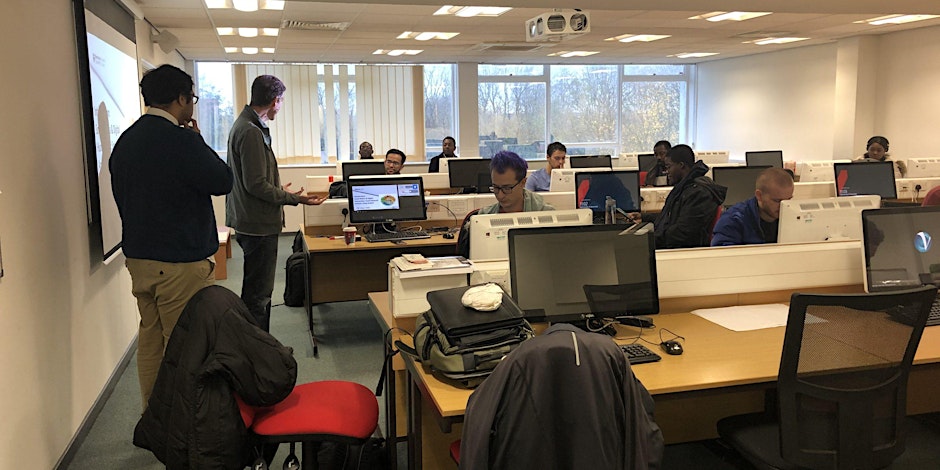
After a short break to digest the morning’s wealth of information and network with fellow attendees, the focus shifted to education. Itai Himelboim took the stage to discuss the integration of NodeXL into classroom settings, sharing pedagogical strategies for teaching network concepts.
Continuing the educational theme, Veronica Espinoza presented on her experiences with NodeXL in the classroom. She offered practical advice on how to engage students in hands-on analysis of social media networks.
Amidst these exciting developments, we were thrilled to introduce Socioviz to the audience. As a new rebranded and innovative tool designed to analyze public conversations on social media.
SocioViz, active since 2015 and recently reconfigured as an innovative startup, evolving in response to the dynamic landscape of social media. The platform’s overhaul, prompted by the recent Twitter API restrictions, was a testament to the team’s resilience and commitment to providing state-of-the-art analytical tools.
The platform has evolved, offering an intuitive interface and a suite of tools powered by Text Analytics, Natural Language Processing, and Machine Learning. This allows users to analyze public conversations on social media, identify influencers, and visually map online communities, all while adapting to the ever-changing landscape of data availability.
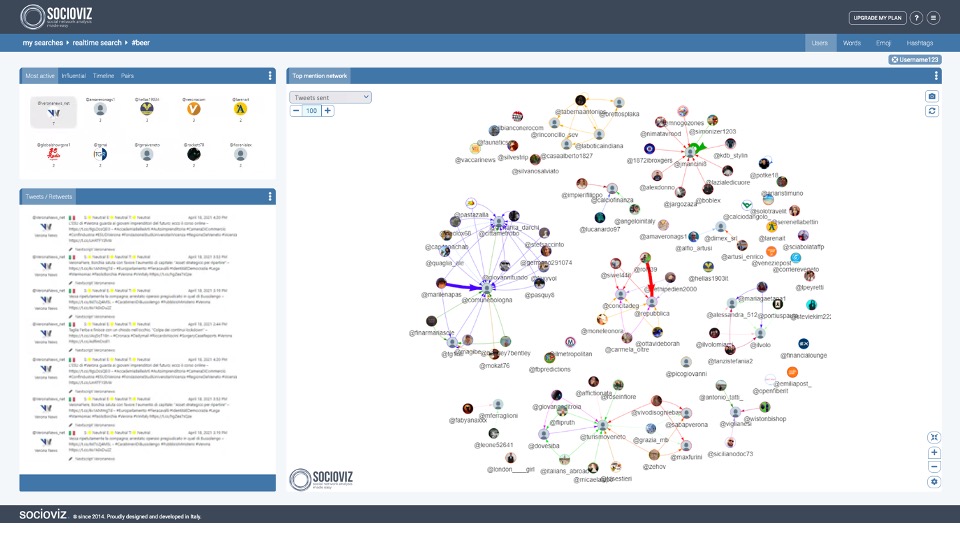
Looking ahead, Socioviz’s roadmap is as ambitious as it is necessary. The team is committed to integrating more diverse data sources and enhancing the platform’s real-time analytics capabilities. This will enable users to extract deeper insights and trends from social media, even as traditional data sources become more restricted. With an emphasis on user-friendliness and accessibility from any browser, Socioviz is poised to fill the gap left by the constriction of data access by major platforms, offering a valuable tool for researchers, educators, and marketers alike.
The symposium was not only a testament to the vibrant community of network analysis instructors but also a beacon for the future of social media research tools, where platforms like Socioviz will play a pivotal role.
Stay tuned for more updates as we continue to shape the future of social media analysis together. If interested in joining the beta program drop a mail to hello@socioviz.net.


 Digital Data Stories
Leave a comment